The Strait of Hormuz and Musandam
The Strait of Hormuz beside Musandam carries a fifth of the world’s oil. Its geography, history, the traffic you can watch from Khasab and how close Iran sits.

Anjum Musandam Team
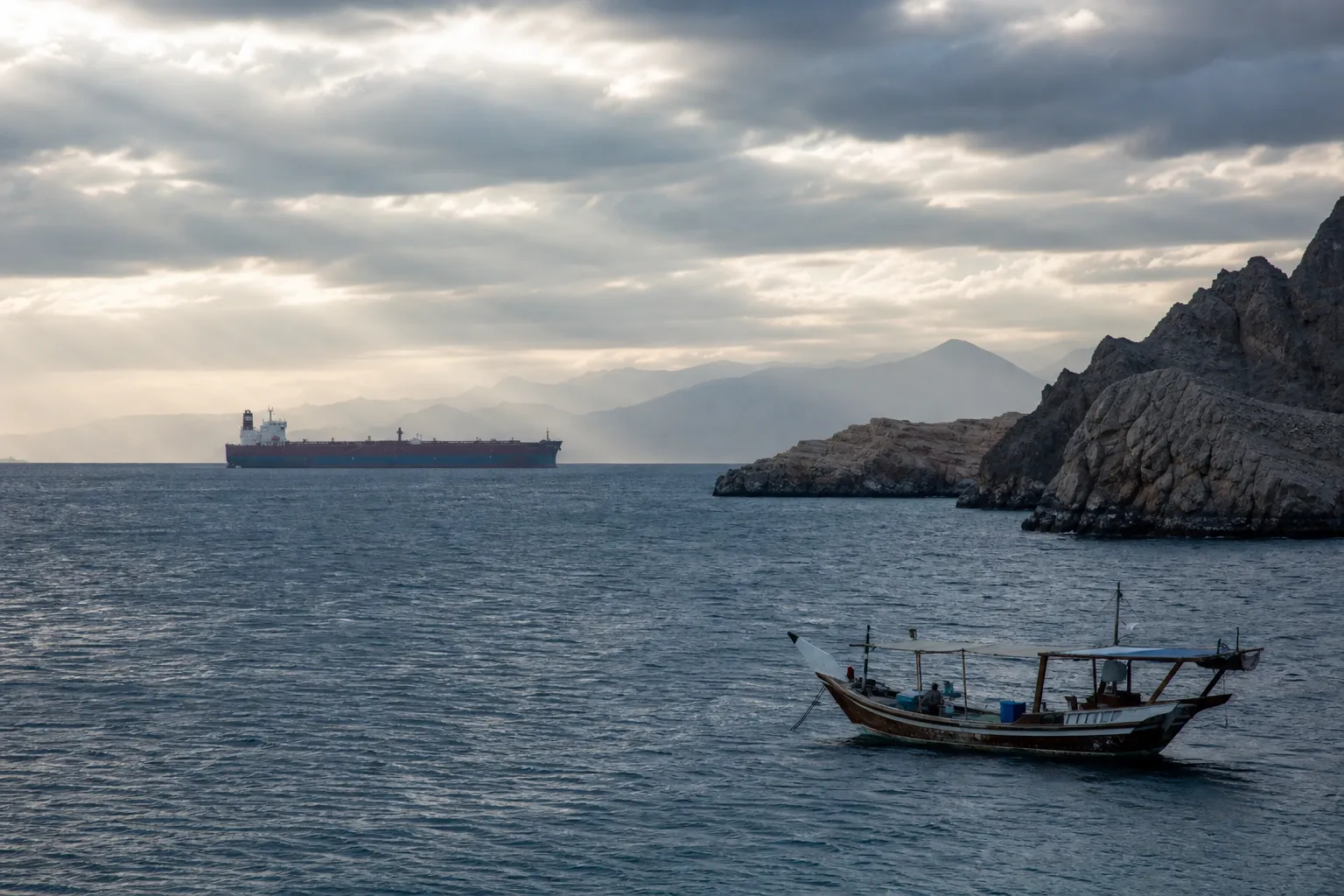 The Strait of Hormuz is the 39-kilometre gateway between the Arabian Gulf and the open ocean — and Musandam is its northern wall. Every fort, every watchtower and half the peninsula's history exist because of this waterway, through which a fifth of the world's oil moves daily. You can see it from the mountain roads, feel it on open-water boat trips, and read its story in Khasab's harbour. Here's the 2026 guide.
Why the strait made Musandam
Musandam juts into the strait like a stone finger pointing at Iran. For five centuries that geography decided everything:
- The Portuguese built Khasab Fort and Bukha Fort to control the strait's shipping
- The British ran their 1864 telegraph cable through it, via Telegraph Island
- The Kumzari people speak a language shaped by the trade that passed their shore
- The fishing fleets of Khasab and Kumzar work the strait's rich waters to this day
Even now, stand on the Khasab corniche at dusk and you'll count the supertankers on the horizon — the modern cargo of the oldest trade route in the Gulf.
Where to see the strait
| Viewpoint | What you get |
|---|---|
| Mountain road viewpoints | The strait's open water from 600m up — clearest in winter air |
| Hills above Kumzar | The narrowest crossing, Iran visible on clear days |
| Khasab corniche | Tanker silhouettes at sunset, no effort required |
| Open-water boat trips | The strait itself — swell, wind and shipping lanes |
The boat-trip experience
In calm months (October–April), speedboat and fishing charters run from Khasab toward the strait's open water, past Kumzar and the peninsula tip. The sea changes character at the strait's edge — the sheltered fjord swell gives way to open ocean. Captains keep a respectful distance from the shipping lanes, where the tankers look like moving islands. It's the closest most travellers will ever get to the artery of the world economy.
The strait's wildlife
The mixing waters make the strait Musandam's richest fishing ground: tuna, kingfish and grouper run the deep channels, while dolphins work the edges of the current and whale sharks pass in the warmest months. Fishing charters from Khasab head here for the big catch — see our fishing trips.
Visitor notes for 2026
- Viewing is free from the roads and viewpoints; boat trips are weather-dependent
- Photography of port facilities is restricted — stick to the natural scenery
- Best light: the strait glows at sunrise from the mountain viewpoints
- Combine with: Kumzar boat trips and Jebel Harim safaris both pair naturally with a strait visit
See the Strait of Hormuz
Book a Kumzar and strait boat trip from Khasab — the peninsula's tip, the shipping lanes and dolphins en route.
Frequently Asked Questions
Can you see the Strait of Hormuz from Musandam?
How wide is the Strait of Hormuz?
Can you take a boat trip into the Strait of Hormuz?
What does the Strait of Hormuz have to do with Musandam's history?
Where is the best place to view the Strait of Hormuz?
Ready to Experience Musandam?
Book your adventure today and discover why Musandam is called the "Norway of Arabia".
Zain Musandam
Local Guide & Musandam Expert
"Zain is a local Musandam tour guide from Khasab, Oman, with over 15 years of experience navigating the Musandam fjords. He specializes in dhow cruises, fjord tours, and hidden gems in Musandam, sharing authentic insights into Omani maritime heritage."
Continue Reading
More guides and tips for your Musandam adventure
 Places
The 8 Best Beaches in Musandam
Read Article Travel Planning
Speedboat Tours Musandam
Read Article Couples
Musandam Honeymoon Guide
Read Article Activities
Kayaking in Musandam
Read Article Destinations
Jebel Harim — Highest Mountain
Read Article Travel Planning