Snorkeling in Musandam: Spots and Conditions
Snorkelling in Musandam: Telegraph Island, Seebi Island and Lima Rock compared, visibility by month, water temperature, currents and what to expect if you are new.

Anjum Musandam Team
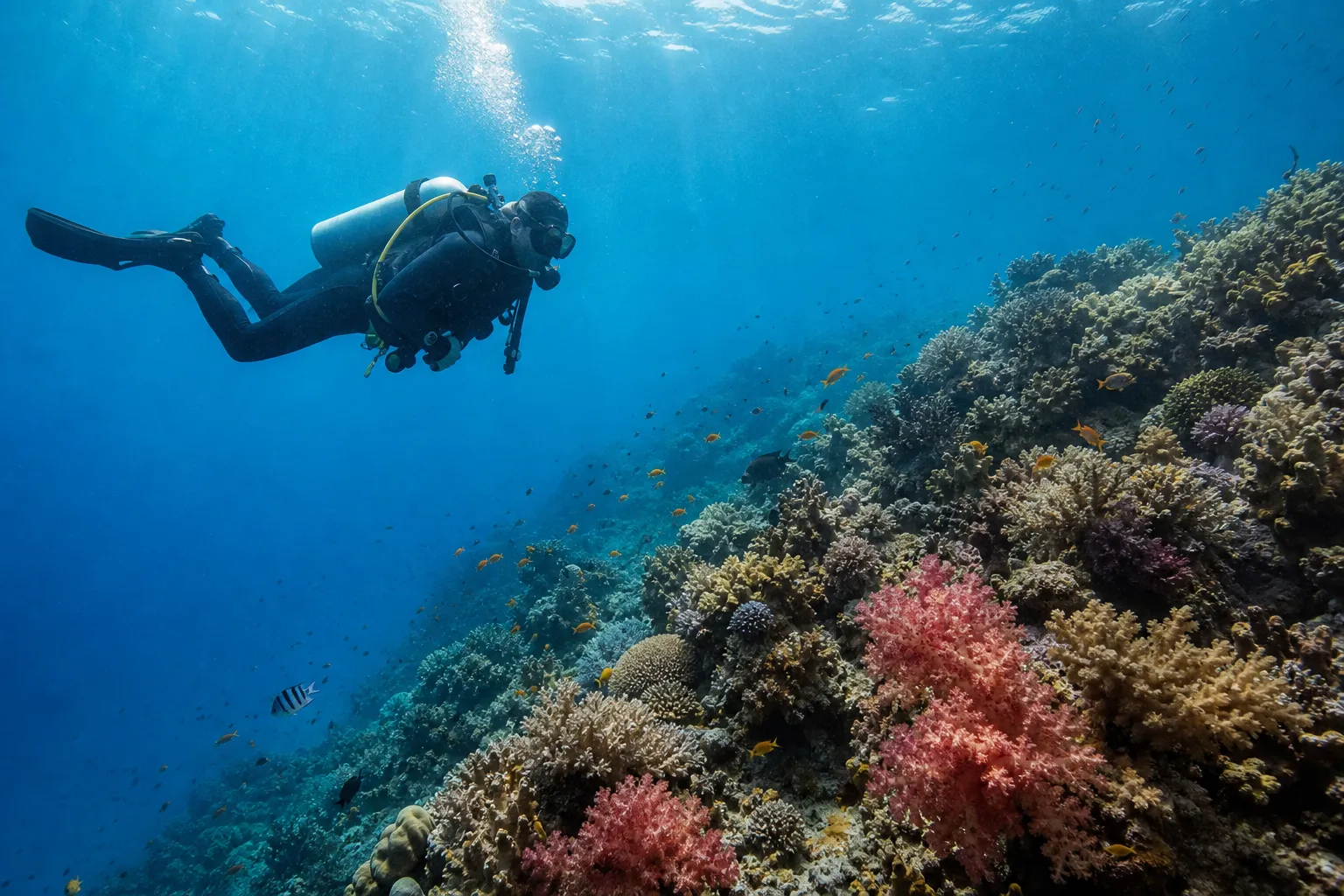
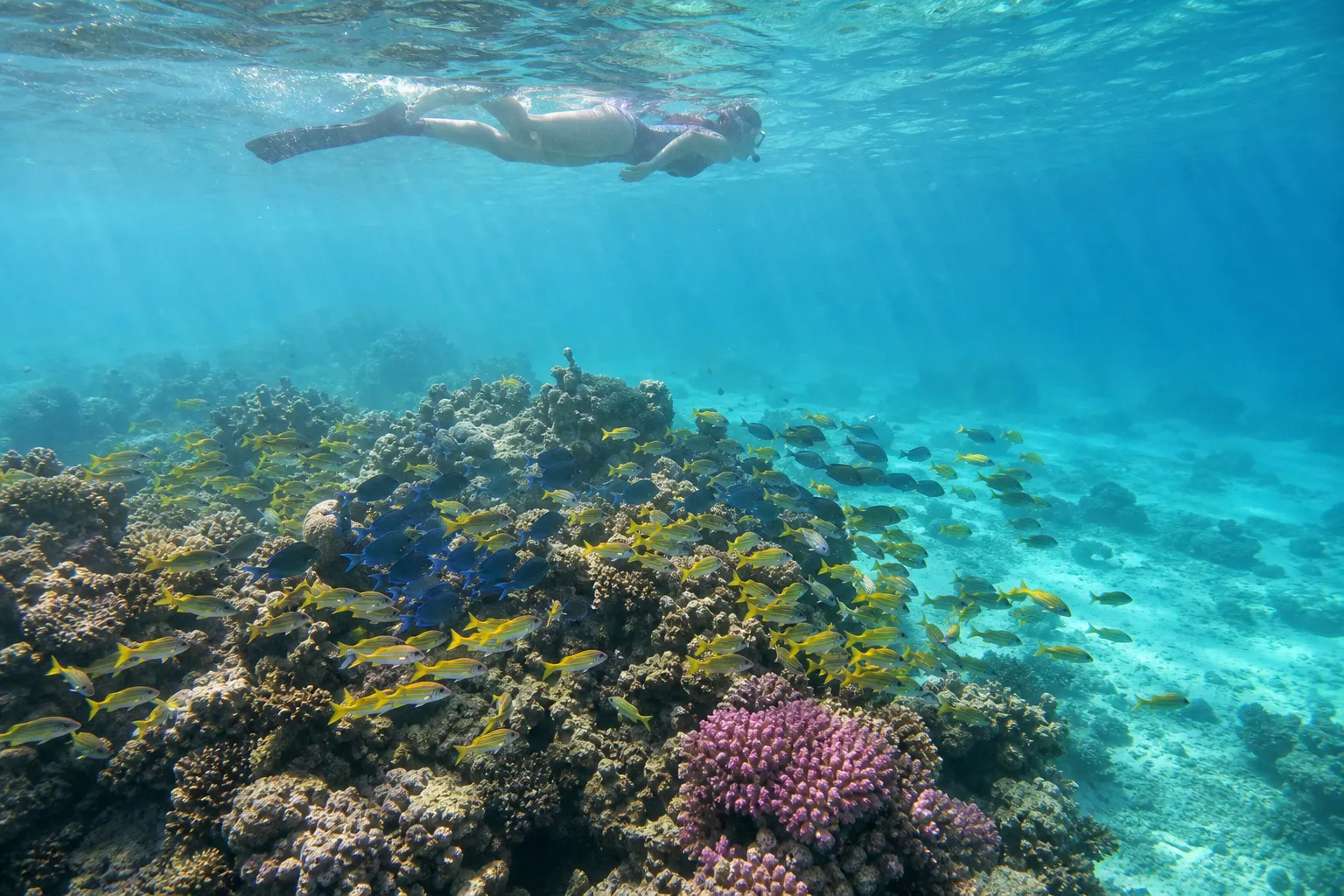 Snorkeling in Musandam is the easiest way to see the fjords' underwater half — warm, sheltered, impossibly clear water where you can drift over coral gardens just metres from the boat. The two headline sites, **Telegraph Island and Seebi Island**, sit inside the protected Khor Ash Sham fjord and are included in most [dhow cruises](/tours/full-day-dhow-cruise/), which means gear, transport and lunch are all handled for you. Here is everything to know for 2026.
The best snorkeling spots, ranked
| Rank | Site | Depth | What you'll see |
|---|---|---|---|
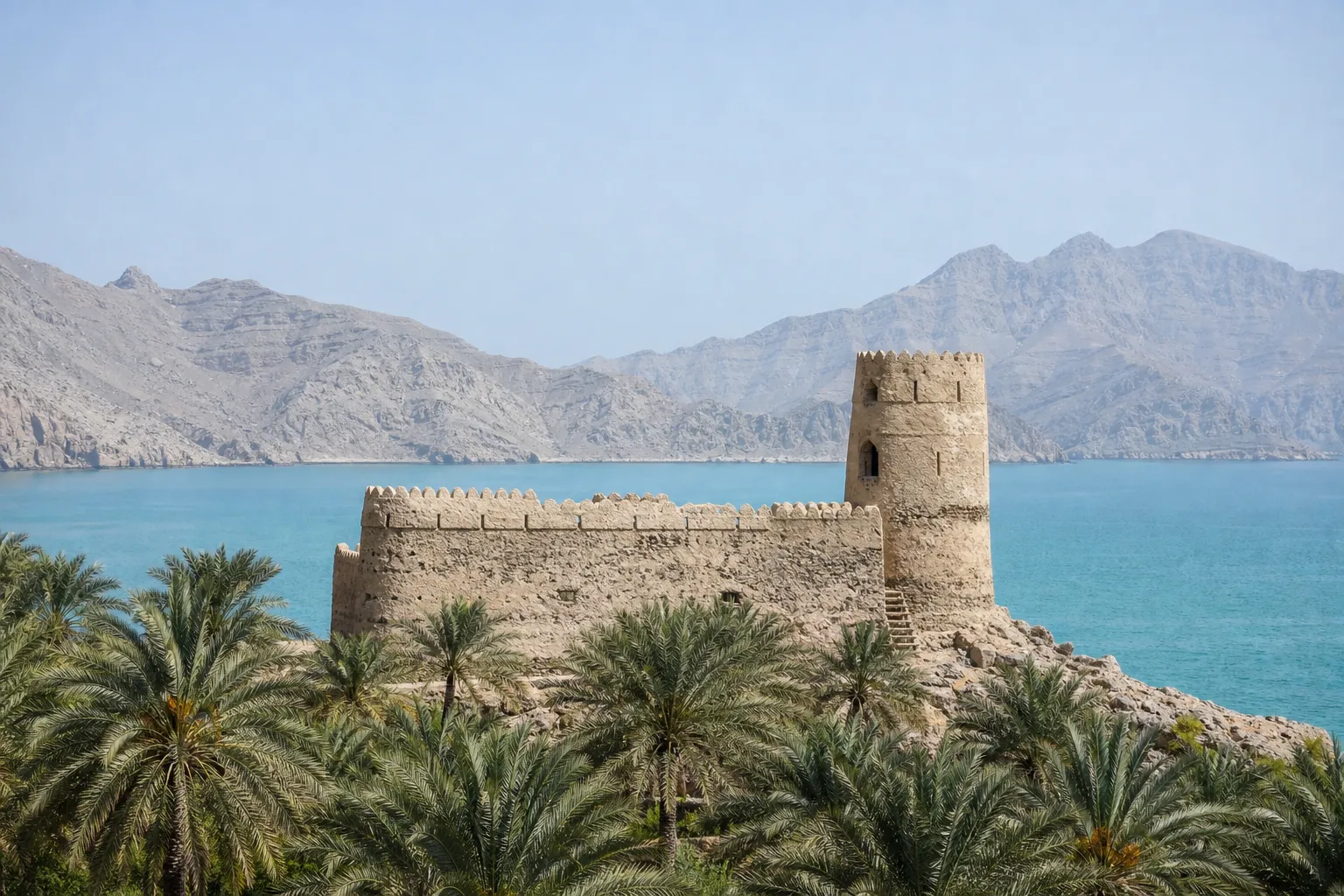
| 1 | Telegraph Island | 2–8m | Coral gardens, angelfish, parrotfish, the 1864 telegraph ruins near the shore |
| 2 | Seebi Island | 1–4m | Shallow turquoise bay, clownfish, calmest water in the fjord — best for beginners |
| 3 | Lima Rock | 6–15m | Deeper reef, larger fish, occasional reef sharks — best for confident snorkelers |
| 4 | Coral patches off Sham | 2–6m | Quiet spots away from the main boats, turtles in the seagrass |
What makes Musandam different from other snorkeling spots
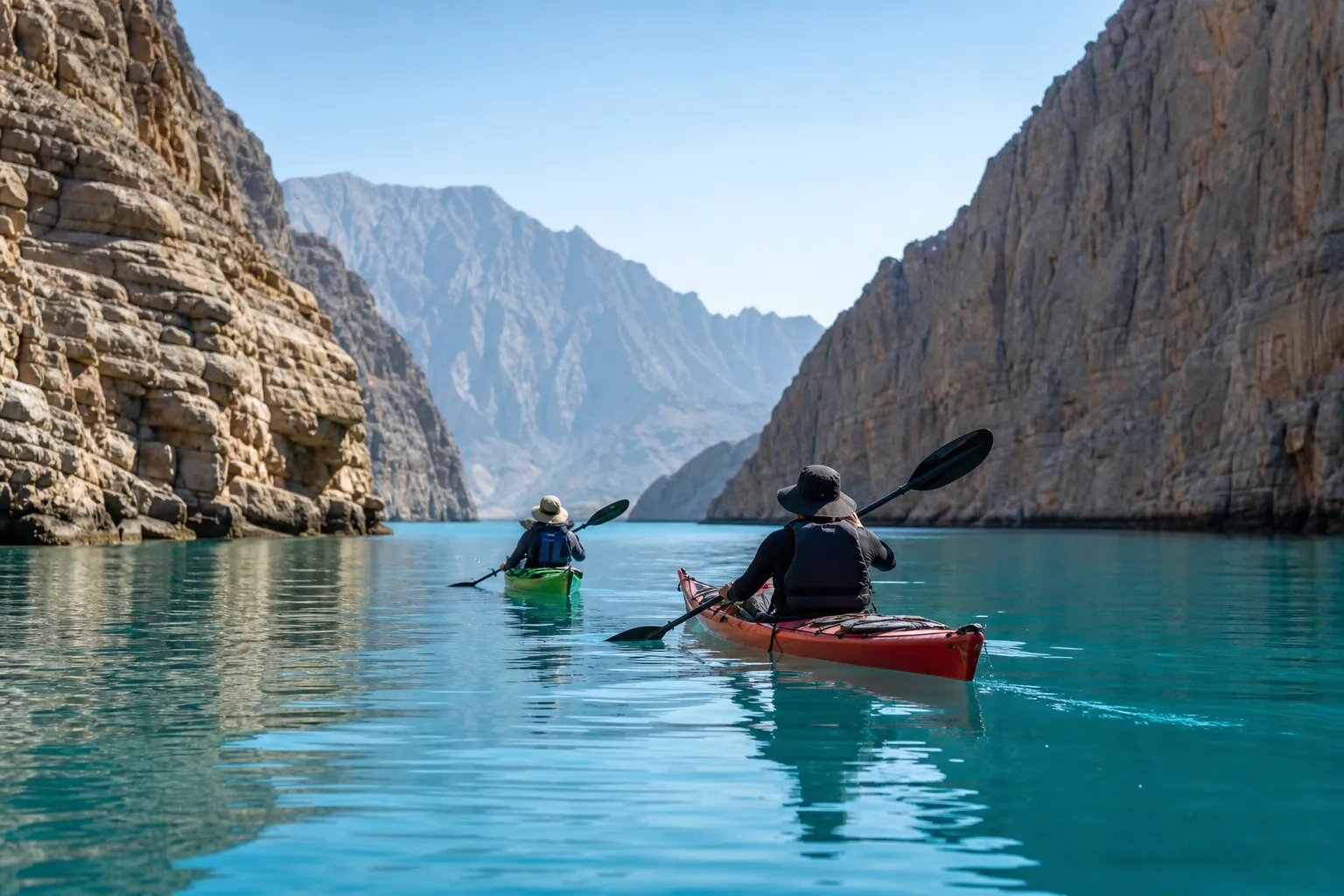
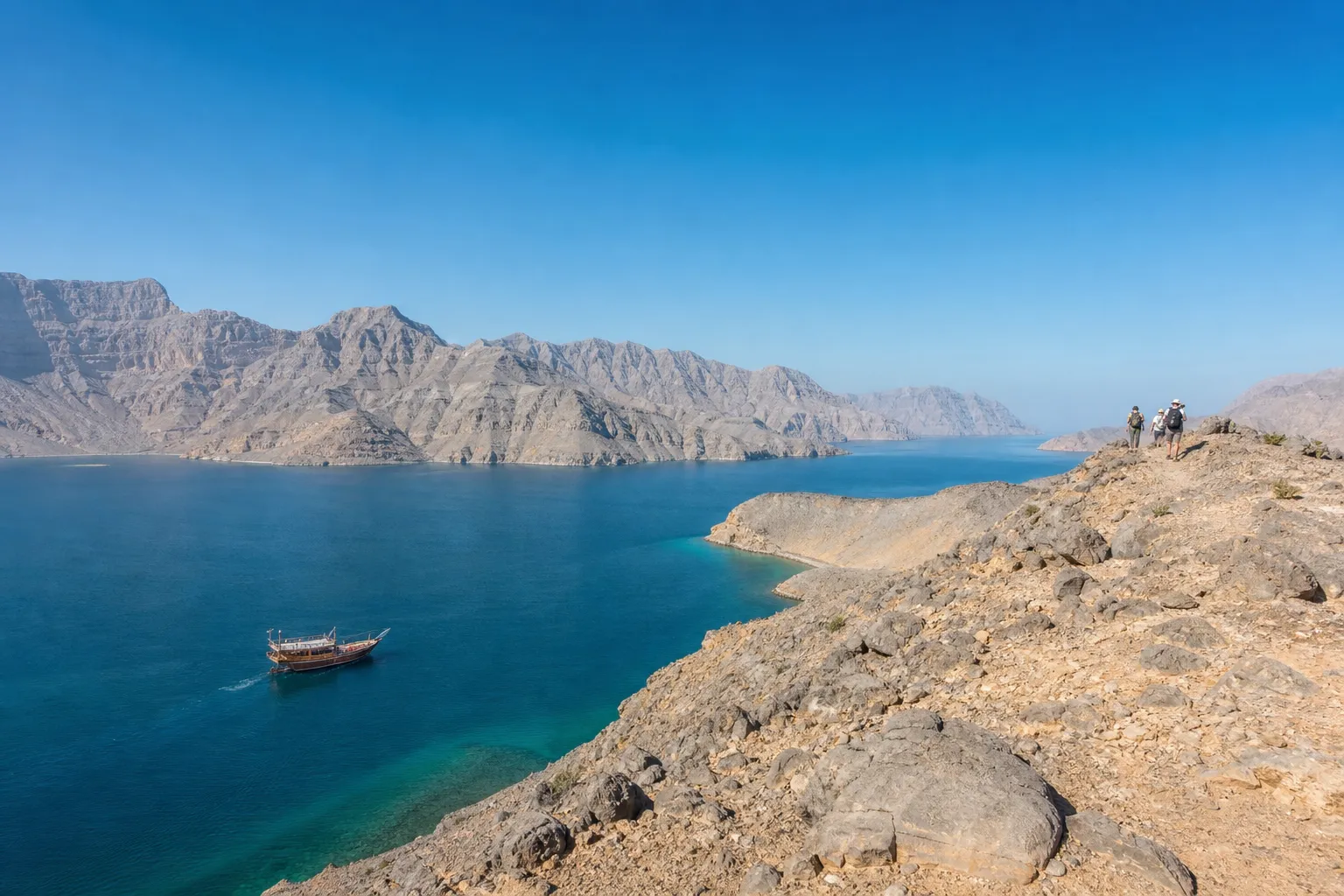
Three things. First, the visibility — the fjord gets little rain and almost no runoff, so 10–20 metres of clarity is normal from October to May. Second, the setting — you snorkel between 600-metre limestone cliffs, not off a hotel beach. Third, the access — nearly every snorkel site is reached by dhow, so there is no shore scramble or current to fight.
A typical snorkeling session on a dhow cruise
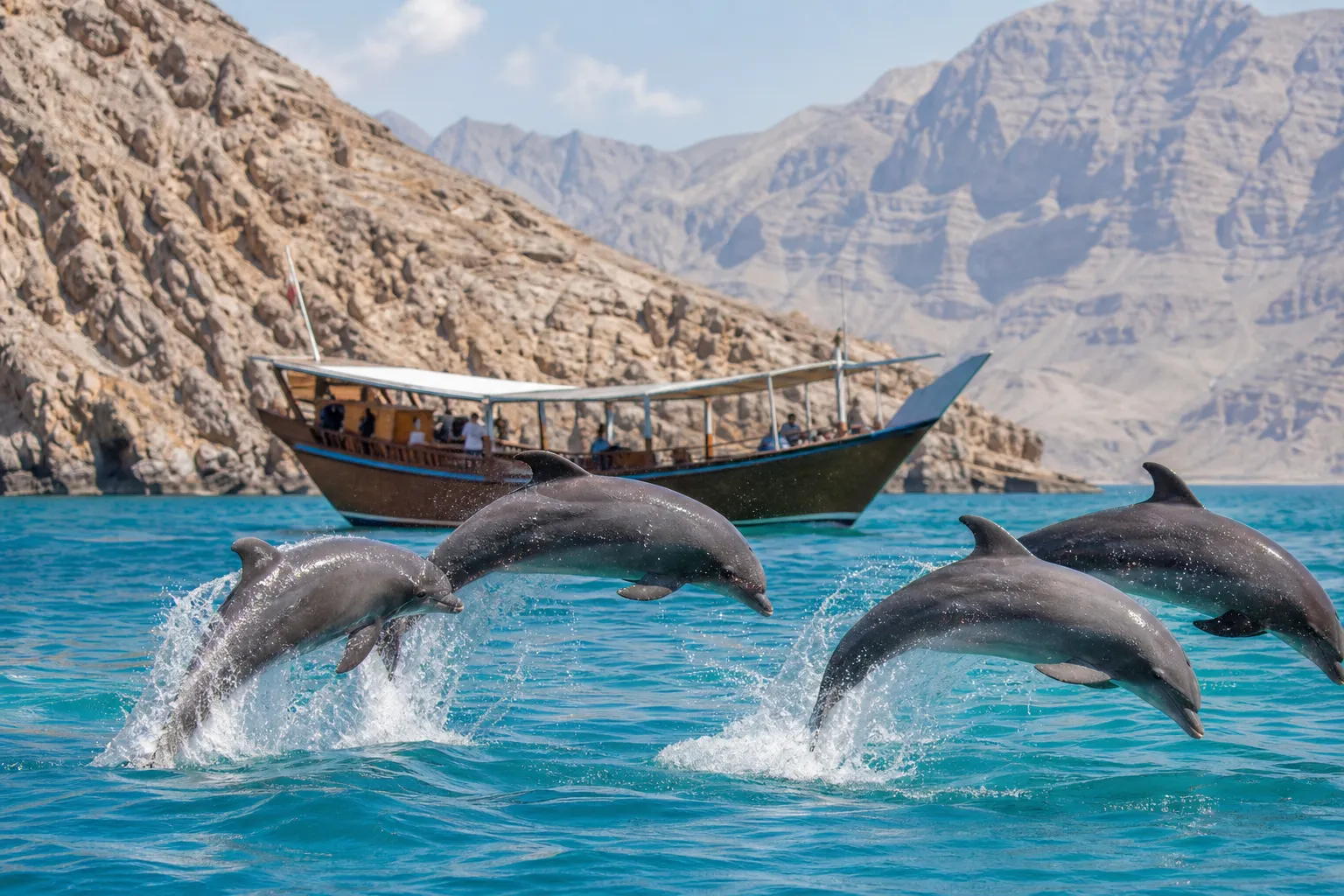
The captain anchors in 3–5 metres of water, the crew passes out masks and fins, and you slip in from the deck ladder. Most people spend 30–45 minutes per stop: drifting over the coral heads near Telegraph Island, then floating in the shallow bowl at Seebi Island. Between stops, back on deck for watermelon, karak tea and the next dolphin pod.
Beginner, intermediate, or advanced?
- Beginner: Seebi Island — sandy bottom, no current, waist-deep entry points.
- Intermediate: Telegraph Island — deeper water, more coral, easy drift around the island.
- Advanced: Lima Rock — offshore reef with bigger fish and occasional shark sightings; book a dedicated boat trip.
Gear: use theirs or bring your own?
Cruise operators provide masks and snorkels; full-day cruises add fins. If you care about fit — and foggy, leaking masks are the #1 beginner frustration — bring your own. Also worth packing: a rash vest (the sun is brutal on your back), reef-safe sunscreen, and a phone pouch for surface photos.
When to go snorkeling
October–May is peak clarity season. Summer (June–September) is hot, but morning surface conditions are often glassy and the fjord is empty — an early 8 AM cruise is the workaround locals use. Avoid the two days after heavy rain, when mountain runoff briefly clouds the inner fjord.
Safety and reef etiquette
- Wear the life jacket until you're confident; no one judges, everyone floats.
- Do not stand on or touch coral — it kills the reef and cuts you.
- Watch boat traffic — stay close to your dhow's marked swim zone.
- Stay hydrated; you sweat more than you notice in salt water.
Ready to snorkel the fjords?
The full-day dhow cruise is the best-value way to do it: two snorkeling stops, lunch, dolphins and gear all included for around 20 OMR per adult.
Snorkel Musandam's Clearest Waters
Join a dhow cruise with snorkeling at Telegraph Island and Seebi Island — gear, lunch and dolphins included.
Frequently Asked Questions
Where are the best snorkeling spots in Musandam?
What marine life can I see while snorkeling in Musandam?
Do I need to bring my own snorkeling gear to Musandam?
Is snorkeling in Musandam suitable for beginners?
When is the best time to snorkel in Musandam?
Is snorkeling included in dhow cruise tours?
Ready to Experience Musandam?
Book your adventure today and discover why Musandam is called the "Norway of Arabia".
Zain Musandam
Local Guide & Musandam Expert
"Zain is a local Musandam tour guide from Khasab, Oman, with over 15 years of experience navigating the Musandam fjords. He specializes in dhow cruises, fjord tours, and hidden gems in Musandam, sharing authentic insights into Omani maritime heritage."
Continue Reading
More guides and tips for your Musandam adventure