The History of Omani Dhows
The story of the Omani dhow: teak hulls sewn with coir, Indian Ocean trade and pearling, the types still sailing, and how Musandam dhows became tour boats.

Anjum Musandam Team
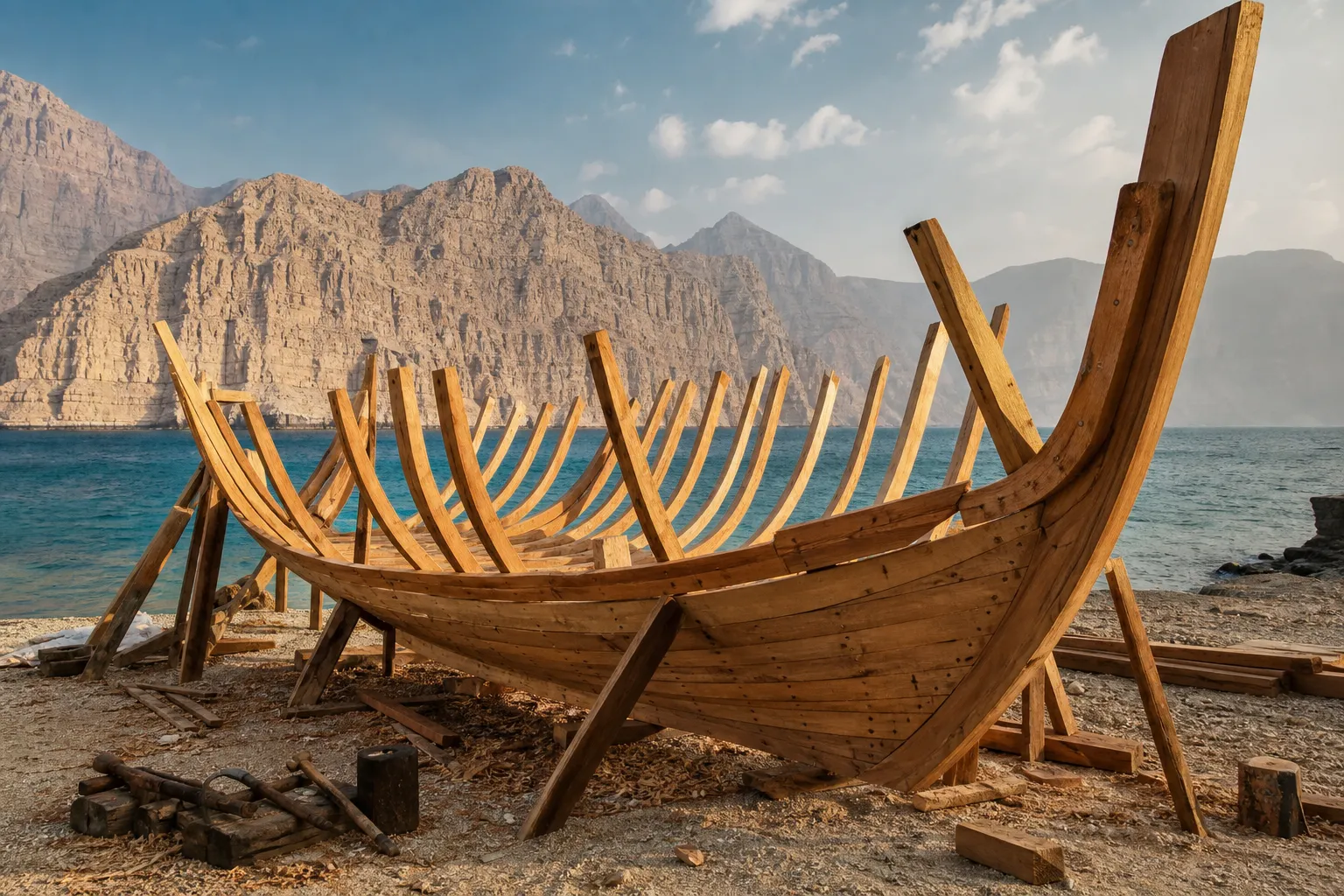 The dhow you'll cruise on in Khasab is the latest chapter of a two-thousand-year story: boats **sewn together without nails**, shaped by monsoon winds, and sailed by Musandam crews who could read the sea like a road map. The trade routes they worked stretched from Gwadar to Zanzibar — and the hull lines survive unchanged in the boats that take you into the fjord today. Here's the history in full.
Where the dhow came from
Dhow is an umbrella name for the wooden trading and fishing craft of the western Indian Ocean. The earliest forms carried frankincense along the Arabian coast; by the medieval period, Omani fleets were the region's dominant traders, moving dates, copper and dried fish out and bringing timber, cloth and spices back from India and East Africa. Musandam's villages supplied the sailors — boys who grew up hand-lining from small boats and graduated to the monsoon runs.
How they were built: the sewn-boat tradition
The defining craft of the builders: no iron, no nails, no drawn plans.
- Hull planks of teak, shaped by eye and tradition
- Sewn seams — planks stitched with coconut-fibre cord through hand-drilled holes
- Sealing — fish oil, lime and shark-liver oil worked into the seams
- The lateen sail — a great triangle on a forward-raked mast, perfect for the monsoon winds
- Lifespan — a well-kept dhow served for decades, passed between generations
Modern Khasab dhows keep the hull lines and the deck culture — the cushions, the low freeboard, the shaded stern — while building with contemporary materials that satisfy marine safety rules.
The great dhow routes
| Route | Cargo out | Cargo back |
|---|---|---|
| Musandam ↔ India | Dates, dried fish | Timber, cloth, rice |
| Oman ↔ East Africa | Dates, lime | Mangrove poles, ivory, slaves (ended 19th c.) |
| Gwadar ↔ Gulf | Fish, salt | Pearls, pottery |
| Khasab ↔ Basra | Dates, limes | Grain, wool |
The seasonal rhythm ran on the monsoon — sail east on the winter winds, return on the summer ones. It was the same calendar for two thousand years.
The dhow's decline and revival
Steel hulls and engines displaced working dhows through the 20th century, and the last cargo dhows retired in the 1970s. Then tourism arrived: the same hulls, fitted with cushions and shade, found a second life as cruise boats — and the craft itself was recognised as national heritage, with dhow-building preserved in places like Sur and celebrated in Khasab's fort museum.
Where to see the history in Musandam
- Khasab Fort museum — model dhows and the tools of the builders
- The harbour — working and cruise dhows side by side
- Aboard your cruise — the deck culture is the living museum: the coffee, the cushions, the pace
- Bukha and Sham — boat-building sheds still repair hulls the old way
Sail the Living History
Book a traditional dhow cruise in Khasab — two thousand years of boatbuilding, still sailing the same fjords.
Frequently Asked Questions
What is the history of the Omani dhow?
Why were dhows important to Oman?
Are traditional dhows still built today?
What is a dhow made of?
How are dhows different from other boats?
Ready to Experience Musandam?
Book your adventure today and discover why Musandam is called the "Norway of Arabia".
Zain Musandam
Local Guide & Musandam Expert
"Zain is a local Musandam tour guide from Khasab, Oman, with over 15 years of experience navigating the Musandam fjords. He specializes in dhow cruises, fjord tours, and hidden gems in Musandam, sharing authentic insights into Omani maritime heritage."
Continue Reading
More guides and tips for your Musandam adventure
 Activities
Camping in Musandam
Read Article Destinations
Bukha Fort — Ancient Fortress
Read Article Activities
Scuba Diving Musandam
Read Article Destinations
Jebel Harim — Highest Mountain
Read Article Travel Planning
Best Time to Visit Musandam
Read Article Family